
A Quiet Revolution in Rwanda: New Hope Technical Institute
Written by: Myrna Lapres
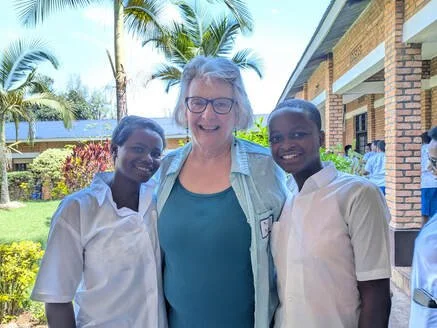
Do you know what you were doing on April 7, 1994? Most of us probably have no idea. Since it is the date of my youngest son’s birth, I was probably making preparations for a party to celebrate his second birthday. I am sure that I had little awareness of the downing of the plane that carried Rwandan President Juvénal Habyarimana that triggered one of the most tragic events in human history—the Rwandan Genocide. It was a systematic massacre conducted for the purpose of ethnic cleansing—neighbors killing neighbors, even their own family members simply because they belonged to a different ethnic group. In just one hundred days, around one million people lost their lives. I recently had the privilege of visiting the country to see the work that Women’s Federation for World Peace has been doing there for the past 30 years. What I found is a quiet revolution taking place that is bringing healing and hope to Rwanda.
Women's Federation for World Peace or WFWP is an international organization that has as its vision: Women working together to realize one global family rooted in a culture of sustainable peace. As a member since it was founded in 1992, one of the projects that the North America branch supports financially is the Schools of Africa Project. In the early 1990s, WFWP Japan launched international cooperation activities by Japanese overseas volunteers to serve all over the world. They started schools, supported opportunities of education for those in need, and created opportunities for women and girls to build a promising future. I had the honor of being part of a small group of WFWP members to visit the New Hope Technical School and see what our donations are supporting. This was the first time that a group representing North America was able to visit the school. In Rwanda, I met one of these volunteers, Marie Nozaki who went there in January 1995 together with nine other Japanese volunteers. The country was beginning to recover under the de facto leadership of Paul Kagame, former commander of the Rwanda Patriotic Front which is credited with ending the genocide. He has been the president of Rwanda from 2000 until today.
Marie told us that many men had been killed or fled the country, resulting a population of 70% women. They asked themselves, “How can these women — who had always lived under a male-dominated system — survive and rebuild their lives?” Believing that helping women gain practical skills would be the key to empowering them economically and beginning to restore their dignity. In 1996, they began a small sewing class with just a few students and two years later New Hope Technical Vocational School was established in 1998.
During this time, Marie met Georgette Umubyeyi, a Rwandan genocide survivor who had lost twelve of her family members during the attacks. She and her brother are the only remaining family members. Georgette has been the WFWP President in Rwanda for the past 30 years. Together with many others, Marie and Georgette are growing the school to create support, hope, and stability in the lives of those who attend.
After a visit to the home of one of the students who receives a scholarship to attend New Hope, I felt overwhelmed with the enormity of the challenges still facing many in Rwanda. We brought some gifts of food staples but it felt like a drop in the bucket in such a humble environment where 8-10 people lived in a small three room structures crowded together on a hillside, water is fetched at a communal pump, and students walk 30-60 minutes each way in order to get to school.
I asked Moriko Hori, WFWP International President who was accompanying us during our stay how does she manage the feeling of not being able to do enough. Her answer was--be the voice to share this with others, share the hope and vision that is changing lives. I ask you to consider supporting the fundraiser that my WFWP N. California chapter is hosting this month. Our goal is $5000 and the funds we raise will support New Hope Technical Institute in offering an expanded lunch program to ensure they are well-fed, healthier, and more motivated to excel in their studies and for hiring instructors with advanced expertise and experience to support the students after graduation.
I had the opportunity to give the sermon at my local church on Sunday, November 23. To watch the full message, please click here.
You can also view highlights from our visit to Rwanda here:
www.facebook.com/wfwpusa
To learn more about the Schools of Africa project, visit:
www.wfwp.us/schools-of-africa
To learn about the Kigali Genocide Memorial that became the birthplace of peace education in Rwanda, kgm.rw/ For many Rwandans, visiting this place is where they can feel close to their family members that were lost during the genocide.
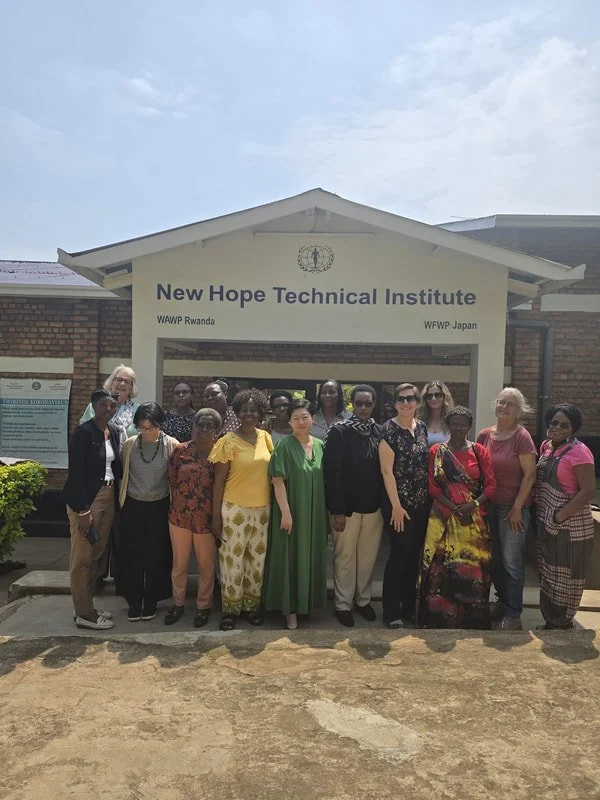
In front of school
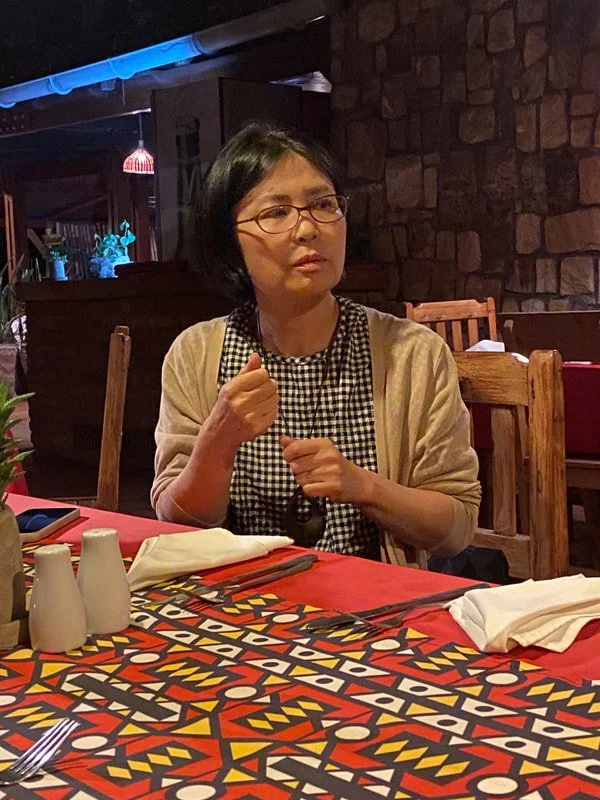
Marie Nozaki, Japanese volunteer, spent 6 years establishing the school & visits every year for 1 month
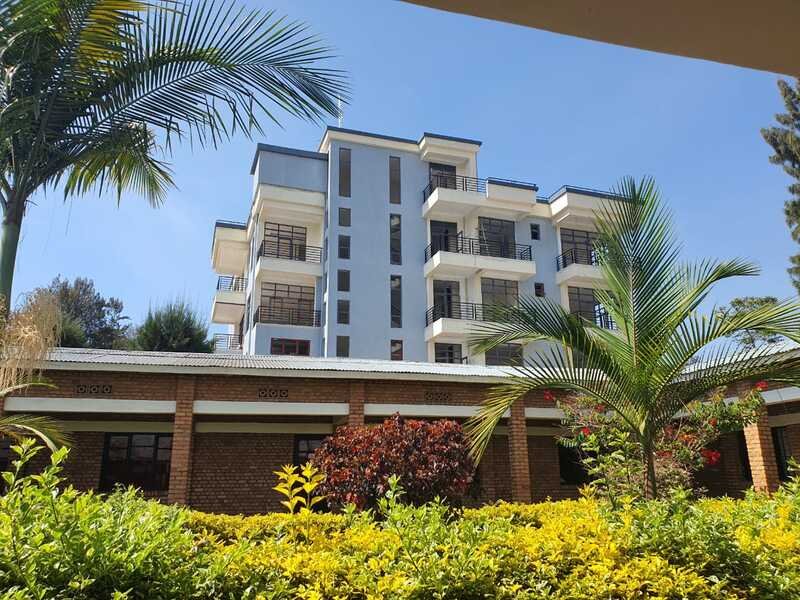
New four story building next door - further education and shops to employ graduates
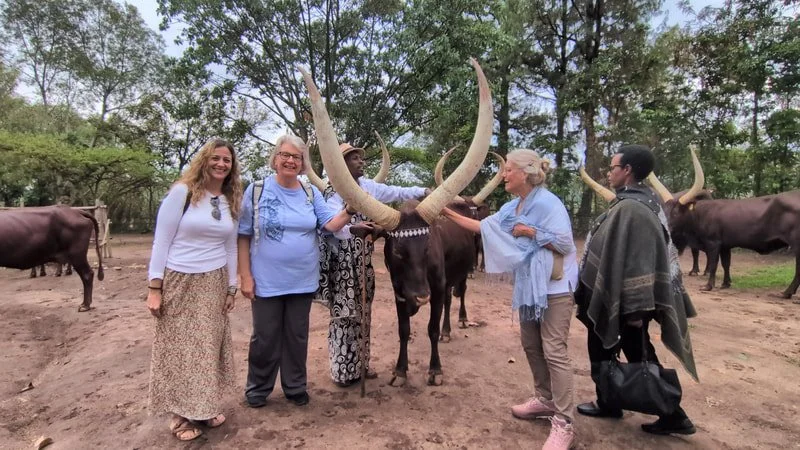
Meet the Imyambo (holy cows) while visiting the King's Palace
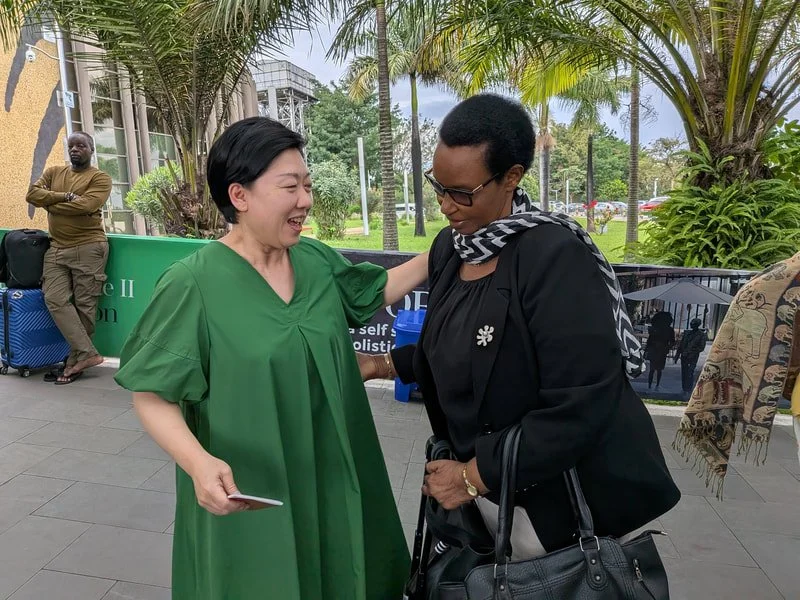
Moriko Hori, Intl. WFWP President (left) & Georgette Umubyeyi, WFWP-Rwanda president
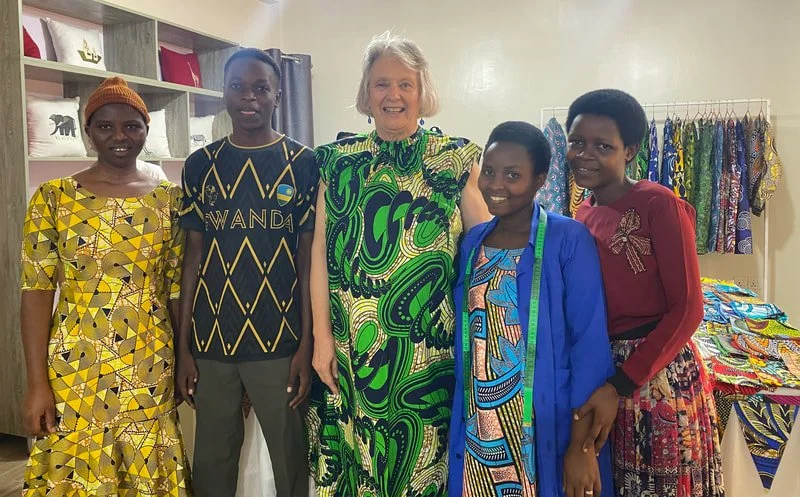
Graduates of New Hope Technical School who made my dress. This shop will be open to the public in the near future.